
Podcast: Play in new window | Download
Subscribe: RSS
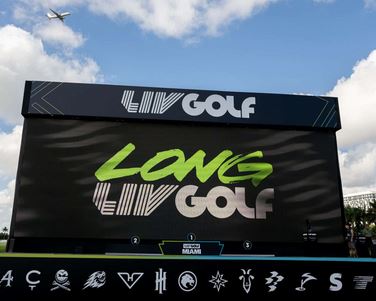
Uh-oh! LIV Golf lost its financial life preserver this week.

The Saudi Public Investment Fund (PIF) is pulling the Saudi P-LUG on LIV Golf at the conclusion of this season in late August.
Meanwhile, PGA Tour players and cheerleaders like Golf Channel’s Brandel Chamblee are doing the expected “I told you so” round of high fives late this week.
LIV Golf announced a restructuring plan Thursday “to support a transition from a foundational launch phase to a diversified, multi-partnered investment model”.

Let me offer a simpler translation.
The Saudi money tree has dried up. They are desperately seeking very wealthy people or cash-rich companies needing a billion-dollar annual tax loss.
Oddly, no one has confirmed (or denied) whether the Saudi Public Investment Fund has officially parted ways with funding LIV Golf.

The league’s Sugar Daddy cannot be happy with losing an estimated $5 billion over five golf seasons beginning in 2022.
Thursday’s announcement by LIV Golf included the addition of an independent board led by a couple of investment bankers. Good luck finding those new pigeons, gents!
New Orleans’ first-ever LIV Golf event was expected to be played in late June. Whose bad idea was that?
Not to worry. This week, we learned that the New Orleans LIV tournament has been “postponed” (perhaps) until this fall.

Louisiana’s state tourism group will receive a refund of more than $1 million already paid to LIV Golf to come to town. However, the state’s taxpayers have already invested $2 million in making needed improvements to bring the former City Park layout (now renamed Bayou Oaks) into condition for a pro golf tournament.
At least Crescent City golfers will be able to enjoy the brand new driving range and other course improvements which have been made.
What are the chances that LIV Golf finds new backers and survives into next year?

Despite all of that flowery rhetoric, LIV Golf’s current business model simply doesn’t work.
The league initially paid more than $1 billion in signing bonuses to major golf champions such as Jon Rahm, Bryson DeChambeau, Phil Mickelson, Cameron Smith, and Bubba Watson. Other top names signed for less than $100 million each.
Brooks Keopka and Patrick Reed have recently left LIV Golf. They both joined LIV Golf during its first year in 2022 and played through 2025.
The two major champions negotiated their own exit plans over the winter. Koepka then cut a deal with the PGA Tour to return this spring. Patrick Reed was required to wait until the PGA Tour’s FedEx Cup concludes in late August before he returns to the tour.
LIV Golf’s biggest success has come in a few foreign countries starved to see some of the top professional golf stars.

Tour events in Australia and South Africa were sold-out this spring with more than 100,000 fans during their LIV Golf tournaments. LIV Golf’s worldwide events are also quite expensive to transport people, equipment, and facilities to different countries every two weeks.
The league has played about half of its tournament schedule in the US.

Those events have generally failed to attract significant crowds or revenue.
LIV Golf pays its golfers a total prize money worth $30 million at each event in 2026.
If a US event draws a total of 40,000 fans at (let’s say) $50 average ticket prices, that generates only $2 million in ticket revenue. The math doesn’t work.
LIV Golf’s television package with FOX Sports (which has been covered in a few previous posts) does not provide the league any significant revenue, either. Playing in foreign countries brings major challenges for television. Time zone differences have caused a few events to fall during the overnight hours back in the US.
It would require take a drastic reduction in LIV Golf’s tournament purses (back down into the $3-$5 million range) to give the league any chance of treading water financially.
Such a payday reduction would likely cause top LIV Golf names like Jon Rahm and Bryson DeChambeau to leave once their contracts expire. DeChambeau’s LIV agreement is set to expire at the end of this summer.
What type of investor wants to spend their money on such a risky business venture with its top attractions leaving? Not many – if any.
Then again, the PGA Tour’s own financial picture isn’t all that great, either

The PGA Tour has always remained closely guarded when it comes to its own financial affairs. Some at PGA headquarters may want to pop some champagne bottles upon hearing of LIV Golf’s likely demise.
In reality, the PGA Tour’s accountant should counsel them to put the bubbly back into the bar – at least for now.
Did you know that the PGA Tour abruptly (and very quietly) ended two long-time events staged in Hawaii?
The PGA Tour has held at least one annual golf tournament in Hawaii since 1965.

Honolulu has played host to the Sony Open in Oahu for 51 years.
Another tournament called the Sentry (Insurance) Open was added in Maui beginning in 1999. It featured the winners of each of the prior year’s PGA golf tournaments along with other leading money winners.
Attendance at both events has never been particularly strong. However, January’s television coverage of golf being played in the warm sunshine of Hawaii had been great in attracting home TV audiences and the title golf sponsors.
The PGA Tour just said “Aloha” to these long-time events beginning next year

Cancellation of these two long-running PGA men’s golf events in Hawaii next year are not the only departures from the PGA Tour after 2026, either.
Farmer’s Insurance ended its long-time sponsorship of the PGA event in San Diego earlier this spring.

The insurance provider had been the title sponsor at Torrey Pines in San Diego for the past 17 years.
Other long-time PGA Tour sponsors such as Genesis (Los Angeles), Charles Schwab (Fort Worth) and Wyndham Hotels (Greensboro) face renewal decisions in 2026.
Primary PGA Tour sponsors are becoming increasingly skeptical about making significant multi-year financial commitments at increasing costs.
The average PGA Tour title sponsorship now costs nearly $15 million per year with a multi-year commitment required from the sponsor.
These title companies expect more than just goodwill when forking-out a significant percentage of their annual advertising budget to sponsor a one week pro golf tournament.
Why are PGA title sponsorships priced so high today?

Let’s go back a few decades. Phil Mickelson first teed-up on the PGA Tour in the summer of 1992. He’s now 55 and was one of the first PGA Tour golfers signed by LIV Golf in 2022.
Tiger Woods has, for practical purposes, retired from the PGA Tour. He turned 50 last December and now qualifies to play on the PGA Champions (Senior) Tour.
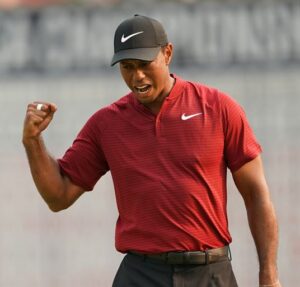
There was a dramatic increase for PGA tournament payouts during Tiger and Phil’s careers. Fans of both golfers helped to generate a renewed interest in the game over the past 30 years.
The total prize pool for ALL PGA Tour events in 1994 was $57 million. By 2024, the men’s golf tournament payouts had increased almost tenfold to $551 million.
Unfortunately, both Phil Mickelson and the oft-injured and recently out-of-sight Tiger Woods are no longer factors in recent years.
The competition from LIV Golf beginning in 2022 absolutely contributed to the PGA Tour maintaining and boosting its tournament payouts. It was done to prevent other major PGA stars from jumping over to the new LIV Golf league.
Guess who has been footing the bill for those huge increases in tournament payouts? Tournament title sponsors, of course!

A golf tournament’s title sponsor generally covers all of the costs associated with bringing a PGA Tour event to each community. The money goes to pay for operational costs on the ground plus that rising amount of tournament prize money being paid to the players.
That good ol’ economic concept of the elasticity of demand is in effect right now.
The loss of PGA Tour long-time tournament title sponsors has resulted in a reduction in the number of annual events.
Many PGA weekly tournaments feature a rather watered-down field with few of the top 50 players bothering to show up. Some may not like the golf course. Others are taking time to prepare for future events or spend the week with their families.
Tournament title sponsors, though, are left with a field with few “name” golfers. That leads to lower local attendance and reduced national television exposure for the title sponsor of that particular golf tournament.
Today’s top PGA Tour fan favorites include Rory McIlroy and Scottie Scheffler.

A little renewed competition from young major champion golfers like LIV Golf’s Bryson DeChambeau, Jon Rahm, and Cam Smith would definitely boost interest at some of the PGA Tour’s most neglected tournament stops.
The PGA Tour’s most recent media rights deals with CBS and NBC/Golf Channel provides annual revenue of $700 million through the year 2030. It would be a smart business decision for the PGA Tour to add the primary stars of LIV Golf into the mix long before the next round of TV rights negotiations.
The PGA Tour shouldn’t gloat about LIV Golf’s financial failure
A $3 billion life preserver was provided to the PGA Tour in early 2024 from private equity partner Strategic Sports Group.
That cash infusion has kept the long-term golf league in respectable financial shape.
Half of the $3 billion was utilized to create a new long-term bonus incentive program for the golfers. Current PGA stars earn a portion of their bonus money based on their annual performance. Importantly, they are required to remain a PGA member in order to collect that money in the future.
The other half of the $3 billion from Strategic Sports Group was slated for “PGA Tour business.” What exactly does that mean? Is it being used to cover tournament losses? What about the cost of funding former PGA players’ retirement accounts?
Nobody knows for sure.
Phil Mickelson had deep suspicions about how the PGA Tour was being managed. That is one reason why Lefty jumped to LIV Golf in 2022.
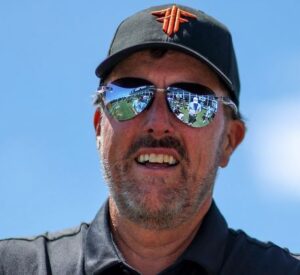
He claimed that the PGA Tour had been unfair to its players by retaining the exclusive rights to sell and market highlights of individual golfers to social media sites without compensation going back to the players.
An increasing lack of trust between top PGA Tour management and several key players came to a head once LIV Golf came knocking in 2022.
How can the PGA Tour patch things up with LIV golfers if that league folds soon?
Yes, I do have a few ideas.
Come back next time for Part 2. Let’s work out a plan so that golf fans emerge as the winners!