
Podcast: Play in new window | Download
Subscribe: RSS
College sports has become a runaway freight train in recent years.

Money and greed (as always) have emerged as the primary villains. Everyone involved wants more.
Several years ago, the NCAA began to allow student-athletes to transfer schools as often as the average student. Prior to that, athletes were required to sit-out one full year after transferring schools. It was supposed to encourage college athletes to think hard prior to making the decision to transfer. Colleges also claimed that this was done to give the student-athletes enough time to acclimate themselves to the academic rigors of their new college environment.
R-i-g-h-t!
Today’s new NCAA Transfer Portal is becoming busier by the year

Upwards of 50% of some sport’s athletes are putting their names in the Transfer Portal. They are in search of more money and playing time elsewhere.
These athletes want the right to transfer as easily as all other college students. The processing of transferring by athletes seems to take place at blazing speed, though.
An average college student has to prepare an application, supply academic performance (grades) along with a mountain of paperwork prior to being admitted as a transfer student at most major universities. The process usually takes several months.
Wouldn’t it be nice to know how (and why) these “ASAP” Transfer Portal college athletes get their paperwork processed by their new universities within just a matter of days or weeks?
Then there’s the new wheel of fortune game called Name, Image, and Likeness

The federal courts have allowed college athletes to be compensated based on their theoretical NIL value.
The original concept of NIL sounded downright noble. Our theoretical college football player simply wanted to have a little spending money to be able go out and enjoy an occasional burger and shake down at Arnold’s.

Within years, the compensation being offered to athletes for their (cough) NIL rights has exploded. Some players are receiving offers of hundreds of thousands of dollars from top college football, basketball, baseball, and even softball programs.
The athletic conferences say they don’t like this, either. However, they spend much of their time renegotiating television and media contracts to generate even more cash to pad their own pockets.
That’s why the College Football Playoffs have risen from two teams to four to 12 today. The conferences are battling with each other today trying to expand the football playoffs from 12 to 24 teams. Why?

More television money, of course.
The athletic conferences, schools, administrators, coaches, players, and, of course, the media companies are focused on more and more money for college athletics. The former systems are broken. No one is showing much in the way of self restraint or leadership in attempting to resolve growing problems.
Who is going to help control this mess? Did someone say “Congress?”
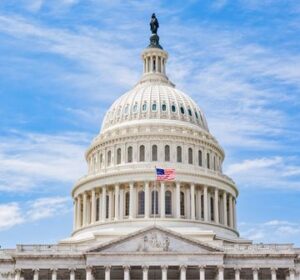
Of course! Let’s ask America’s legislative body to intervene since the college sports community cannot seem to regulate its fast-growing greed.
We know that the 435 House and 100 Senate members rarely agree on anything.
Well, they do seem to find enough votes (usually after midnight) in late December to raise their own pay. They won’t object when a motion for a multi-week recess is raised, either.

Heaven forbid if any member of the House or Senate dares to propose a vote concerning (gasp!) term limits.
So, why should anyone believe that the US Congress will be able to regulate college sports?
Over the past year, the US House of Representatives has tried and recently failed.
A bill entitled the “Student Compensation through Rights and Endorsements” Act was floated. The “SCORE” Act slithered its way through the halls of Congress at snail-like speed. The House of Representatives couldn’t even muster enough support to force a full floor vote on the measure a few weeks ago.
That bill is now officially dead.
But never fear! The US Senate wants to “Protect” college sports!

Move over, House of Representatives! A bipartisan bill drafted by Senators Ted Cruz of Texas (R) and Maria Cantwell of Washington (D) finally emerged this past week. It is now being contemplated by the extremely deliberative (slow moving) body called the US Senate.
This bill is called the “Protect College Sports Act of 2026.” You can read it by clicking here.
The 111-page document was introduced in the Senate on Wednesday, June 3.
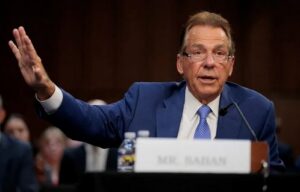
Former University of Alabama football coach Nick Saban and several other heavyweights of college sports testified before the Senate in support of the measure. The President is also in favor of the proposal.
Advocates believe there is a chance that it could pass by August 1, 2026. That is less than 60 days after it was introduced to the Senate.
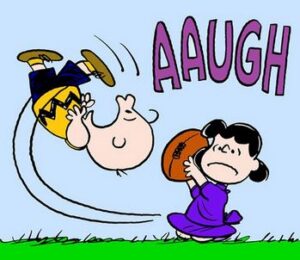
Personally, I think there is a higher probability of seeing Charlie Brown finally kick that football that Lucy is holding this fall!
Let’s review several of the primary portions of the Protect College Sports Act of 2026:
Name, Image, and Likeness – The agreement would serve to put NIL under federal jurisdiction. That is needed, because many states have already implemented a variety of different enforcement provisions and loopholes. The proposed federal legislation would require NIL agents for athletes to be registered with the government and cap their fees at 5%. Athletes must disclose their NIL compensation above $600 per year.
Medical coverage for athletes – Colleges would be required to pay for out-of-pocket medical costs for athletes for five years following the athlete’s final competition for the school.
Transfers – Each athlete would receive one transfer without losing athletic eligibility. Subsequent transfers may be considered in the event of coaching changes, discontinued sports at a school, and for graduate students.
Academics – The legislation requires athletes to complete their eligibility within five years beginning with the earlier of (a) high school graduation or (b) turning age 19. Exemptions would exist for military service, religious missions, etc.
Coaching changes – The Senate proposal would prohibit college head coaches from leaving their school prior to the end of the season to coach, recruit for, or otherwise take over at a different FBS (large division) program.
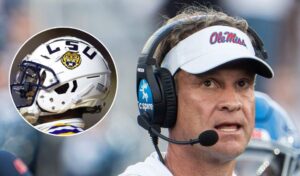
Yes, this is now being called the Lane Kiffin provision.
Local television for football and basketball teams – There must be at least one free local television broadcast outlet televising football and basketball games for major universities within their local market.
Anti-trust protection television rights for schools and conferences – This would afford college athletics to function in the same way in which the NFL, NBA, and other national professional sports leagues operate. However, at least 75% of the current FBS schools must sign-off on this provision for it to become effective.
Bars major athletic conferences ($1 billion or more in annual revenues) from merging or acquiring each other – The Senate legislation wants to preserve and promote regional rivalries and stop major universities from changing athletic conference affiliations.
College football season must end by January 8 – This provision is intended to allow for a smoother transition for students (and transfers) prior to the start of the spring semester.
What I like:

Restricting athletic transfers to only one time is a winner. This will keep players and the coaches from shopping around so much. Instead, there should be increased focus on player development (and, perhaps, academics).
The proposed provision for medical coverage for athletes continuing for five years following their college participation seems like a solid idea. The schools earn revenue from athletic competitions. They should be required to provide catastrophic insurance coverage for athletes who are injured while playing for the school.
A hard cap on five years of college eligibility is also very smart. There is a significant physical and mental difference between an 18-year old football player coming out of high school and a 24-year old who may have been granted a sixth year of eligibility.
The football season ending by January 8 is a definite winner! Cut the regular season to 11 games if you need more time for the playoffs. (Yes, I realize that won’t happen)
Local “free” television coverage for local teams sounds good. This is what the NFL does during Monday Night Football games on ESPN. The local market’s ABC affiliate generally provides coverage for viewers who are not ESPN subscribers. When considering this provision for college football, would all Louisiana cities not named Baton Rouge also be considered “local” for LSU football games? Taxpayers in other Louisiana cities would also like to watch LSU (the state’s flagship public university) football games on their local TV station. Expect a battle over this issue.
I’m not so sure about…

Many people are asking why we haven’t dropped the entire NIL charade and consider the players to be paid employees of the university. The primary authors of the Senate legislation intentionally omitted this issue. That’s because the recent House legislation dared to address this thorny issue. Arguments on the subject caused the entire bill to go down in flames.
Perhaps the Supreme Court will eventually decide the matter.
Another roadblock will be in getting 75% of the current 136 member FBS (major college) group of football schools to agree on the anti-trust protection issues. The Big Ten Conference and SEC (much like the House and Senate) can’t seem to agree on just about anything in recent years.
With regard to college coaches leaving for other schools, shouldn’t there also be a provision that coaches cannot be fired prior to the end of the team’s season, too?
I think the minimum NIL amount for reporting purposes should be raised from $600 per year to $1,200. That would be only $100/month for an athlete. Spend more time reviewing the larger NIL transactions.
Finally, I believe that most rational adults would prefer not having the federal government getting involved in issues such as this. Can you imagine the resulting circus of governmental regulatory requirements and exorbitant administrative costs to implement this bill if signed into law?
The Senate deliberation of the proposed Save College Sports Act of 2026 might serve as a much needed wake-up call right now.

The major athletic conferences should voluntarily come together ASAP to address and implement several of this bill’s best provisions. They could end the push for unwanted federal oversight and regulation by simply taking this matter into their own hands.
Hey, Big Ten and SEC! It’s time to lead and end your petty turf wars before the Senate addresses these problems for you. Time to get to work!