Podcast: Play in new window | Download
Subscribe: RSS
Speedy Gonzalez would love playing a round of golf with newly-crowned Open Championship winner Ryan Fox.

A round of golf at last week’s British Open at Royal Birkdale averaged a snooze-worthy 5 ½ hours. Don’t blame the weather. All four days of this year’s event were played under benign conditions. No rain or high winds affected play.
The final player on the golf course on Sunday was a relative unknown named Ryan Fox.
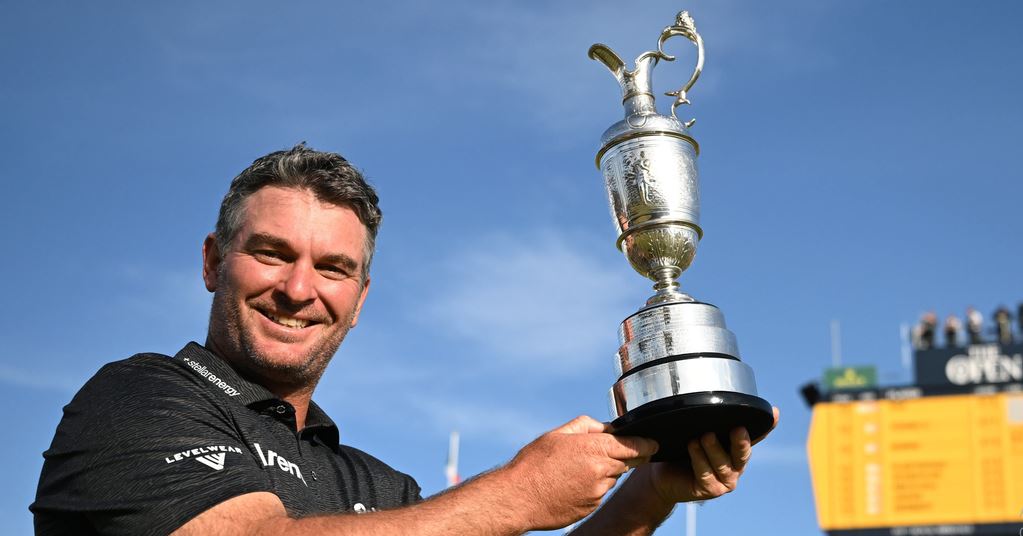
The native New Zealander was already tied with clubhouse leader Cameron Young at 9-under par as he sized-up an 11 foot birdie putt to win the tournament. A massive throng of British fans surrounded the green to watch the drama unfold.
It took 39-year old Ryan Fox (seeking just his third professional victory) just 22 seconds to line-up and execute the most important putt of his golfing career. He drained the birdie putt, won the Claret Jug trophy, and captured (on paper) more than $3.2 million in first prize money.
Unfortunately, the British government absconded with nearly 45% of his payday. The take home pay for the new “Champion Golfer of the Year” was sliced to $1.76 million.

Great Britain’s His Majesty’s Revenue and Customs group had already pilfered $1.44 million on behalf of the host country’s bank account.
And you thought the I.R.S. was tough?
Ryan Fox has now become the people’s champion to help end slow play!
Weekend warriors at public golf courses are monitored by an oft-times surly roving ranger who tries to keep rounds at four hours or less.
Wouldn’t it be nice to see a 4-hour pace of play in professional golf?
Why should professional golfers (who require significantly fewer shots, utilize personal caddies and play with the latest high-tech equipment and golf balls) take 25% longer than a player who requires 30% more swings?
New Zealand native Ryan Fox is the exact opposite of today’s sloth-like pro golfers. He is already thinking about his next shot while moving toward the golf ball.
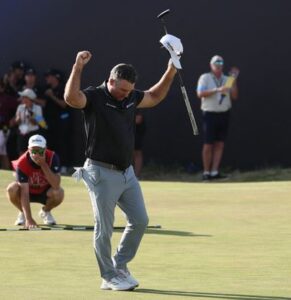
Fox said, “The less time I have to think about it, the less bad stuff can creep in there.” He added, “It’s not that difficult to pick a shot and pick a club.”
Indeed!
It must be maddening for Ryan Fox to play golf with many other professional golfers who seem to agonize over every single shot.
Sure, today’s “Slow Poke Pro Golfer Brigade” tries to defend its slower pace of play by saying the higher tournament payouts require more time to consider each shot.

The Slow Pokes would chuckle and say that you, too, would take longer if standing over a $1.4 million putt (the difference between a first and second place finish) for a major championship win.
Oops! That analogy just went down the drain. Speedy Ryan Fox stepped right up and sank the winning putt on hole #18 in just 22 seconds on Sunday.
Other golfers have taken note of Ryan Fox’ faster pace.
PGA golfer Min Woo Lee played with Fox in an earlier round. He was excited for Ryan Fox’s victory and the message it should send to golfers at all levels.
Lee said, “He just plays his own game, and that’s something that everyone can learn. Whenever a fast player wins, it’s the greatest thing ever!”
Should we blame the greatest golfer of all time for today’s slow play?
Jack Nicklaus is best remembered for his 18 major championships and being one of the most focused golfers of all time.
The Golden Bear had a tendency to stand over his putts for what felt like an eternity during his heyday in the 1960’s and 70’s.
Nicklaus famously received a two stroke penalty for slow play during his first year as a professional golfer in 1962.
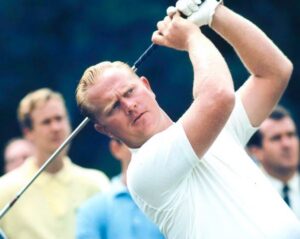
A rules official at the Portland (Oregon) Open gave Nicklaus a two-shot penalty for failing to speed-up his play during the second round of that tournament.
The PGA official told him, “Jack, you can take as long as you want when you’re over the golf ball, but be ready when it’s your turn!”
Nicklaus had believed that it was poor etiquette to prep for his next shot when it wasn’t officially his turn to play.
Jack Nicklaus ended up winning the tournament in Portland by six shots. He said he learned a valuable lesson from being penalized for slow play.
Lee Trevino is the same age (86) as Nicklaus. He laughed about his friend receiving that two-shot penalty for slow play in 1962.
“It didn’t make a difference. But at least they had the guts to penalize a superstar!”
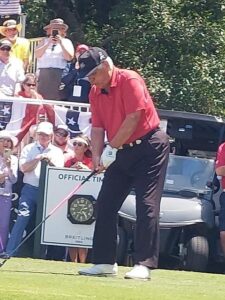
Trevino (winner of six major titles) was one of the fastest golfers of his generation. Lee made a number of suggestions to improve the pace of play.
Golfers should take two or less waggles prior to beginning their backswing. They should be required to putt-out on every green without marking their golf ball again. Trevino was one of the earliest advocates of “Ready golf”. That means that the first player ready to hit the ball should go right ahead.
Former European Tour star Colin Montgomerie won 54 professional events – mostly in Europe. He had a second place finish at the Open Championship, the Masters, and the US Open.
Monty (who plays on the PGA Champions Tour today) ripped into the slow play seen at last week’s major championship.
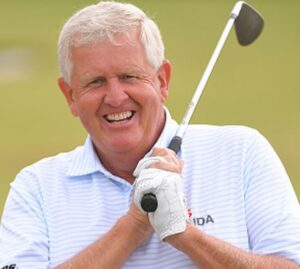
“TV hates it and specatators hate it,” he voiced. “Too long is the chat between the caddie and the player…it goes on forever! The (yardage) book comes out. How many times do they get that bloody book out?”
Is it time for pro golfers to ditch their caddies?
The role of a professional golf caddie has grown significantly in the past half century. A caddie originally just toted a heavy 40-pound bag of clubs for five miles every round for a sometimes temperamental golfer.
Today’s caddies now function as the chief meteorologist (wind speed and direction) and sports psychologist (“Stay in the moment!”).
Many of the top professional golf caddies earn $500,000 per year or more for their efforts.
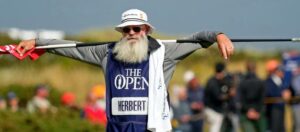
Most receive a weekly minimum payday from $1,500 to $3,000 plus a sliding percentage of the player’s earnings from the week’s golf tournament.
The caddie for Open Championship winner Ryan Fox was expected to receive a 10% share of the winner’s check.
I wonder if the caddie’s $320,000 earnings were taxed by the Brits, too?
Perhaps we may soon see an AI-based rolling golf bag cart to follow the players around.
It could spew yardages, provide wind speeds and directions, and offer encouraging words to the golfer. Especially those who just dumped their approach shot into a lake in front of the green!
Too much time is being wasted in conversations between today’s pro golfers and their caddies prior to nearly every shot. There is zero evidence that the additional time spent in consultation has resulted in lower scoring in professional golf.
Let’s fix it! Penalties to dock the golfer’s paycheck are the most effective way to increase speed of play
This weekend, I watched as one pro golfer marked his golf ball less than six inches away from the hole rather than just tapping it in.
I kid you not. The distance about the width of his hand.
Most golfers wear spikeless shoes. It shouldn’t matter if the player briefly stepped into the line of his playing partner in order to quickly complete that short putt.
This seemed like a perfect example of today’s slothful play.
Slow play has been fostered by a lack of tough rules and a lack of enforcement.

The United States Golf Association (USGA) rules do not spend a lot of space addressing the pace of play.
However, Rule 5.6 was adopted to limit golfers to 40 seconds to make a stroke after the player is ready to hit.
Let’s say that Rory McIlroy has just completed his second shot from the fairway. Now it’s now my turn. Rule 5.6 states that I should complete my shot within 40 seconds after Rory’s golf ball coming to rest.
Pro tip – Put a stopwatch on any golfer while you watch a PGA or LPGA event. Most will hit their tee shots in the allotted 40-second time. However, more than half will exceed 40 seconds on every subsequent shot until they complete the hole.
Did you know that there is already a (human) walking scorer assigned to follow each group in men’s and women’s professional golf tournaments?
The PGA and other pro tours can and should provide a stopwatch to the scorer to record the time for each golfer’s shot. That information (in addition to the golfer’s score) could be reported after every hole.
Upon the first violation, a rules official should advise the player that they are being warned about slow play. Every subsequent 40-second violation should come with a one-shot penalty for that hole.
Players receiving two or more penalties during a round of golf will quickly get the picture. I wouldn’t be surprised if tournament scoring might be just as good or even better than today.
Newly crowned Open Champion Ryan Fox would heartily agree!
The problem (much like in politics) is getting the PGA and LPGA to pass rules providing for specific penalties enforcing the pace of play
It is akin to seeing someone in the US House or Senate voluntarily introduce a bill on term limits or to require a balanced federal budget.
Should it happen? Yes. Will it happen? Not if the players have their way.
Enforcing the pace of play with legitimate penalties will also have a trickle down effect. Increased speed of play on the golf course will improve college, high school, and junior golf, too.
With less wasted time, more people might consider playing golf again. That would translate into more revenue for golf courses!

If Ryan Fox can help bring an end to slow play in professional golf, then consider me one of his biggest fans.