
Podcast: Play in new window | Download
Subscribe: RSS
The large school division FBS football season began in late August as the fall semester was getting underway.
Football players for the four major college football teams are still competing this week in the semifinal round of the 12-team College Football playoffs on Thursday and Friday night.
Isn’t it strange that college football season is still underway long after the fall semester has ended?
Don’t these young men have to attend classes in the new semester?

Many colleges and universities have already started a new semester of classes in January.
My review of the online academic calendars for each of the four remaining College Football Playoff teams indicated that new classes have or will start as follows:
Oregon – Monday, January 5 (classes are already underway)
Indiana – Monday, January 12 (starts on Monday)
Miami (FL) – Monday, January 12 (ditto)
Ole Miss – Tuesday, January 20 (this school apparently planned ahead anticipating to win the national title!)
Two of these four teams will be eliminated after the semifinal games this week. Players on the winning teams must wait until after the championship game on Monday night, January 19 for their football season to finally end.
Who came up with this post-season schedule? (Hint – a sports media giant which pays billions of dollars for the exclusive rights to televise these games)

Meanwhile, the NCAA’s Transfer Portal is now open and some players on the four remaining teams have already signed with another college football team!
This college football season at Ole Miss began with redshirt sophomore quarterback Austin Simmons under center. He injured his ankle during the Rebels’ second game and was replaced by the talented Division II transfer quarterback Trinidad Chambliss.
Austin Simmons is an academic honor roll student who has already earned an Ole Miss degree in multi-disciplinary studies in May, 2025.
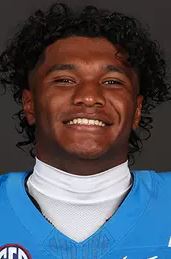
He recently placed his name into the NCAA’s transfer portal and just signed to play football next season for the SEC’s Missouri Tigers. By the way, Mizzou is slated to begin its spring semester on Tuesday, January 20.
Questions like this are among the incredible complications facing college football today.
How did we get here?

The word “greed” is the rather obvious answer.
The NCAA is supposed to provide the framework for college athletics, but they have effectively abdicated that role in the past few decades. They now seem more concerned with preserving their own lucrative revenue stream than enforcing their own rules and risk being sued for every decision they make.
Football already provided significant revenues for most major college programs. For example, LSU has utilized the wealth from football revenues to support the majority of its other athletic programs on campus in Baton Rouge.
The ability of college football to draw millions of television viewers on Saturday has created a relatively new problem. Increasingly fragmented television networks are now lining up to paying billions for long-term television rights with major football conferences.

That’s because college football delivers several million mostly male viewers in the prime buying demographic (ages 25-49) every weekend from late August through early January.
Don’t forget the increasing role of sports wagering, too. There has been a dramatic rise in the number of sports wagering entities in recent years. Billions of dollars (especially during this expanded playoff season) are being spent on major college football games every week.
How can we control this NCAA Transfer Portal?

The NCAA formerly required college athletes to sit-out for one year after transferring from one school to another.
Not so today. The NCAA’s wild and crazy Transfer Portal (which opened for business at midnight on January 2) now allows athletes to transfer from one school to another – just like the “average” college student can do.
As of Thursday, January 9, there were 4,500 NCAA Division 1 players who had their name in the proverbial hat trying to find a new school willing to commit to more playing time and, of course, more money.
Unlike the rest of the student body, though, today’s highly recruited athletes seem to magically appear on campus at the very last moment. His or her new coach is somehow (wink) able to pull the strings with the school’s administration to admit this new student immediately.
Good luck to an average sophomore business major if he or she shows up less than a week prior to the beginning of a new semester wanting to transfer into the school!
College athletes are now legally being paid – though the rules (?) are quite fuzzy

The court systems now allow college athletes to receive compensation relating to their athletic accomplishments. Since college football generates the overwhelming majority of revenue, those players want a significant share of the growing revenue pie.
Would it surprise you to learn that several of the top college football quarterbacks are signing one-year NIL (Name, Image, and Likeness) agreements this week for $5 million or more to play next fall at dear ol’ Wassamatta U?
That is the equivalent to the NFL pay for a player selected with the 10th overall pick in the first round of last spring’s draft.
It has become financially prudent for most football players to stick around and play another year of college football rather than risk being cut by an NFL team after the preseason games end next August.
See also – Vanderbilt’s Diego Pavia
Vanderbilt’s undersized but highly successful quarterback Diego Pavia went from having zero football scholarships coming out of high school to earning millions of NIL cash this season. The former junior college walk-on later transferred to New Mexico State and eventually to Vanderbilt University.
Diego Pavia has been now been enrolled in college for six years.
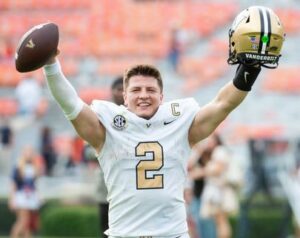
The soon-to-be 24-year old quarterback is about 5’10” tall and weighs 205 pounds. He led Vanderbilt to its first 10-win season and finished as runner-up for the Heisman Trophy.
Pavia is estimated to be the 11th rated quarterback if he enters next spring’s NFL draft. He would be fortunate to be drafted before the fourth or fifth round.
Diego Pavia has hired attorneys to petition the NCAA to allow the highly-effective college quarterback to return to Vanderbilt next season. It would be his seventh year in college!
He will easily earn more money playing at Vanderbilt next year than being a mid-to-late round selection in the spring NFL draft. It’s a very smart business move.
College sports seem to have become a hybrid of yesteryear’s rules and today’s professional sports
It wasn’t long ago when college athletes were provided with valuable scholarships to cover the cost of their studies plus room and board in exchange for their athletic talents.
Today’s total cost of attending an in-state public college is now $30,000 per year. A private college will cost twice that amount.
Let’s call the national average $40,000 per year per athlete.

A recent NCAA study showed approximately 30,000 college football players participating in the FBS and FCS (smaller school) levels. With 136 FBS schools and another 125 FCS football-playing universities, that averages to 115 football players per school.
Using our $40,000 annual cost for each of the 115 football players per school, each major football school is forking out $4.6 million to cover the costs of their football team.
On the revenue side, more than $3 billion is now being paid by television media companies to televise weekly football games and the playoffs. With 136 FBS teams, that represents an average of $22 million of TV revenue per school.
The players are quite aware of that remaining $17 million of TV revenue and want their share of it.
How does this compare with how owners and players share revenue in the NFL?
The NFL generates over $11 billion per year in television revenue. With 32 NFL franchises, each team receives $340 million from TV alone. The local teams also generate millions from ticket sales, parking, concessions, and merchandise.
The players (like most corporate employees) are being paid about 50% of the team’s revenues.
This year’s NFL salary cap was established at about $212 million per 53-player team. That’s exactly $4 million per player.
Now that we have a better handle on the numbers, it’s time to clean this mess up!
A. What would the average “salary” be for major college football programs based on this year’s television revenues?
Let’s use the NFL model and split the $3 billion of college football TV revenue. The schools would receive 50% and the players can divvy-up the other 50%.
The 136 FBS schools would divide their $1.5 billion. That amounts to $11 million per school. Schools could first utilize the money to offset the football players’ tuition/room/board annual costs of $4.6 million (as described earlier). The remaining $6+ million could be used to support the revenue-deficient athletic programs at the university.

Likewise, the other $1.5 billion could be split equally among the 115 players at each of the 136 FBS schools. Those 15,640 players would receive an average “pay” of $96,000 apiece in 2025.
B. What about these NIL deals?
Nothing should prohibit a top athlete from negotiating a legitimate contract based on his or her fair market value for promotional services.
Every NIL deal, though, must be approved by the school and then submitted for final review and approval by the newly appointed “Czar of College Sports” (Vote for me!).
All fraudulent deals would result in an immediate suspension of the athlete for up to one year and the school being placed on probation (and loss of TV revenue) for a similar period. The penalties must be stiff in order to prevent inevitable cheating.
C. How would you fix the NCAA Transfer Portal?

That’s easy! First, let’s address the coaches.
The coaches (head coaches and staff) must be retained by the school until the day following the winner of that sport’s national championship (January 19). College coaches will have two weeks to sign with another school (or professional team) or elect to stay put during this two week period.
For the players, each sport’s annual transfer portal season would begin on the day after the coaching moves occur. The players’ transfer portal will be open for a minimum of one month and then close. It’s “one and done” with no secondary portal seasons.
D. When should colleges be allowed to sign high school athletes?
It has never made sense that a high school athlete should be asked to sign a letter of intent to play in college sports before completing their final sports season as a senior. Some kids are receiving scholarship offers coming out of the eighth grade!

Let’s change this!
In our new “world”, a high school athlete may only sign a national letter of intent to play college athletics (1) during his or her senior year and (2) one week following the conclusion of his or her sport’s high school state championship game.
Could changes like these happen anytime soon?
Some want Congress to make new laws to cause some of these changes to happen.

Good luck with that. They can’t seem to agree on when to take a lunch break.
It would be better for the conferences, schools, coaches, and players to voluntarily lock hands along with the (ugh) NCAA and establish a Czar of College Sports to make and enforce some new common-sense rules.
Many of us would like to see former Alabama coach Nick Saban head this important task.

His focus and passion is unmatched. Hire that man for the job – if he really wants it!
If there aren’t any applicants, though, you can reach always me at swampswamisports@gmail.com!