
Podcast: Play in new window | Download
Subscribe: RSS
Troubled LIV Golf finally filed its long-awaited Chapter 11 bankruptcy paperwork on Tuesday in a New Jersey court.
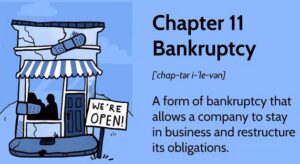
A Chapter 11 bankruptcy attempts to restructure the company’s debts but also allows the entity to continue operations. Chapter 7 bankruptcy filings usually signal the white flag of financial surrender.
The Saudi Public Investment Fund (PIF) spent upwards of $6 billion to sign PGA golf stars and then bankroll dozens of worldwide golf events over the past five years. Saudi’s PIF finally decided to turn-off the money-printing machine operated by LIV Golf at the end of August.
This upstart golf league is now desperately shaking the financial bushes in search of new sources of financing. They want to re-launch the golf league in 2027 as LIV Golf 2.0.
After the Saudi PIF announced it was pulling the financial plug in late August, LIV Golf appointed some new executives to its board. Their resumes are filled with corporate restructuring experience.
They truly have their work cut out for them.
Eugene Davis is one of the new leaders. He is CEO of privately-held Pirinate Consulting Group which specializes in corporate turnarounds.
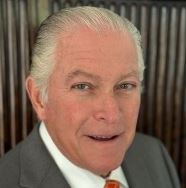
LIV Golf named the 71-year old Davis as its Chairman of the Independent Directors Committee a few months ago. You will find his name listed all over this week’s LIV Golf Chapter 11 filing.
Davis said in April, 2026, “LIV Golf…has built a global league with passionate fans, world-class talent, and demonstrated commercial momentum.”
His new management team is intent on launching LIV 2.0 in 2027. Maybe.
In order to begin LIV 2.0, “Classic” LIV Golf has a lot of debtors to settle-up with
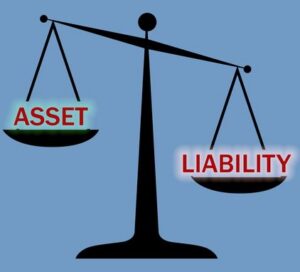
Tuesday’s Chapter 11 bankruptcy filing (click here to read the actual document) listed LIV Golf’s assets of “more than $100 million but less than $500 million.” Liabilities showed “more than $500 million but less than $1 billion” due its creditors.
Let’s take the worst case. Assume LIV Golf has $100 million in assets but nearly $1 billion in liabilities.
That means that creditors might receive (perhaps) 10 cents on the dollar in value. That value won’t necessarily be in cash, either. Some creditors may receive a proportionate share of the ownership in a newly emerging golf entity.
Nearly half of the top 30 creditors owed the most money by LIV Golf are, indeed, the golfers. All seven of the top names on the IOU list are LIV golfers:
- Jon Rahm – $7.5 million
- Bryson DeChambeau – $5.8 million
- Dustin Johnson – $5.5 million
- Cam Smith – $4.8 million
- Adrian Meronk – $4.4 million
- Tyrell Hatton – $3.4 million
- Bubba Watson – $3.3 million
Other golfers owed big money by “Classic” LIV are:
Abraham Ancer (9) – $2.7 million
Ben An (10) – $1.8 million
Brooks Koepka (12) – $1.7 million
Caleb Surratt (17) – $1.3 million
Joaquin Niemann (18) – $1.3 million
Lucas Herbert (24) – $1 million
Tom McKibbin (27) – $1 million
These IOU’s for these 14 golfers appeared under the heading “Player Participation Agreement.”
LIV Golf signed most of its pro golfers from either the PGA Tour or the DP (European) Tour. Their individual contracts are quite private.
The “Player Participation Agreement” likely requires each LIV golfer to tee it up in each of LIV Golf’s events during the season.
Brooks Keopka (#12 on the IOU list at $1.7 mm) negotiated an exit from LIV Golf after the 2025 golf season and returned to the PGA Tour in 2026.
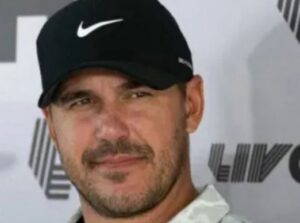
Perhaps Koepka’s exit agreement from LIV Golf may have included some form of deferred compensation which was to be paid in 2026 or a future year.
For Jon Rahm (who signed with LIV Golf for $300 million) and Bryson DeChambeau ($125 million), the remaining money owed to each of them in this bankruptcy filing (though significant) is a relatively small percentage of their original packages.
Not all golfers signed by LIV Golf became filthy rich
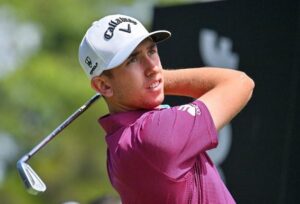
For some like Northern Ireland’s Tom McKibbin ($1 million due), that amount owned by LIV Golf is a significant percentage of his estimated $5 million contract. McKibbin told reporters recently that he remains under his LIV Golf contract “for a few more years.”
Tom McKibbin and several other LIV golfers have begun participating on the DP World Tour this fall while waiting on LIV Golf’s restructuring.
He (and several other LIV golfers including former World #1 ranked Jon Rahm) will be forced to make a decision soon.
The DP World Tour announced that it will not allow LIV Golf players to play on both tours beginning in 2027. Golfers must choose one league and stick with it for the entire season.
LIV Golf’s Chapter 11 bankruptcy filing may nudge some players like Tom McKibbin to cut their losses and return to the lower-paying but more financially secure DP World Tour in 2027.
Where was Phil Mickelson’s name in this filing?

The list of top 30 creditors in LIV Golf’s Chapter 11 bankruptcy filing did not mention Phil Mickelson. He became LIV’s first big name star to bolt from the PGA Tour and join LIV Golf in 2022. His contract with the new golf league was reportedly worth $200 million.
Lefty participated on the LIV Golf Tour for the league’s first four seasons ending in 2025. Phil Mickelson’s contractual obligations to LIV Golf may have ended at that time. He did not play in LIV Golf events during 2026 due to an ongoing medical issue involving a close family member.
Welcome to the LIV Golf bankruptcy filing, Louisiana!

Another notable party owed a significant amount of money is the State of Louisiana (#20 at $1.22 million).
LIV Golf was originally slated to play a golf tournament beginning June 25 at the newly renovated City Park golf course in New Orleans. A local television station reported that City Park had received $2 million in state government funding to upgrade its golf course and facilities ahead of the proposed LIV Golf event. Another $1 million was reportedly advanced to LIV Golf by the state as part of the deal.
The New Orleans LIV Golf event was postponed in late April with no reasons given. There had been speculation that LIV Golf was attempting to reschedule the tournament for this fall.
After Tuesday’s Chapter 11 bankruptcy filing, there is a zero percent chance that LIV Golf will be hosting an event in New Orleans this fall.
What else was contained in the LIV Golf Chapter 11 bankruptcy filing?

Tuesday’s Chapter 11 bankruptcy filing told a lot about LIV Golf’s financial pickle.
I was surprised to see that the Saudi PIF was willing to loan nearly $50 million to LIV Golf (as Debtor in Possession). That money should be used to help LIV Golf stay afloat for a few more months as the entity tries to acquire and implement new sources of funding.
According to bankruptcy rules, the “Debtor in Possession” is expected to be paid back first.
There were an amazing 56 different LIV Golf corporate entities listed on the bankruptcy filing.
Those names included seven which began with the term “LIV Golf” (such as LIV Golf Inc., Holdings, Ltd., Investments, and Events). Another group of eight entities began with the golf term “Wedge” (clever, eh?).
Then there were 13 different consecutively-numbered entities such as “FAIRWAY TM BLOCKER 1, LLC”. Another 13 LIV entities used consecutively-numbered names such as “FAIRWAY TM INTERMEDIATE 1, LLC” on the bankruptcy filing.
Speaking of the number 13, LIV Golf conducted exactly 13 tournaments in 2026. Does each tournament have its own separate corporate entities to account for tournament revenues and expenses?
LIV Golf’s corporate structure made me wonder if they had planned for a possible future financial failure (bankruptcy) from the very beginning.
What’s next for LIV Golf?

Tuesday’s LIV Golf bankruptcy filing also contained information confirming the identity of at least one new source of future funding.
Private equity company BC Partners is willing to invest up to $300 million if LIV Golf 2.0 gets off the ground in 2027.
Keep in mind that the Saudi Public Investment Fund lost about $1 billion per year with LIV Golf.
LIV 2.0 will need to drastically cut its tournament payouts and other operating expenses by more than 50% for the new investor(s) to have a chance of becoming successful.
LIV Golf’s ever-optimistic CEO Scott O’Neil wrote on Tuesday, “The next phase of LIV Golf will be built around a sustainable business model and deeper alignment between the players and the League, with team golf at its core.”
His press release mentioned LIV 2.0 would expand to 75 players next year and introduce a cut line during each event. Expect to hear the same on-course thumping music blaring again in 2027, too.

Party on, Garth!
The CEO is proud that LIV Golf’s average audience is about 20 years younger than the PGA Tour’s Medicare-aged viewers. LIV Golf deserves credit for admitting children under 12 years of age free of charge into its golf tournaments.
Scott O’Neil is paid handsomely to speak lovingly about his golf product.
File this away
The truth remains that LIV’s worldwide golf events played across vastly different time zones makes for a very difficult television sell to US-based advertisers.
LIV Golf’s lack of a consistent weekly TV starting time and weekly TV channel in the US (yes, I’m talking to you, FOX Sports) makes it hard to imagine how this league will earn enough revenue to turn the financial corner.
As mentioned in a previous post, keep your eye on top LIV golfer Jon Rahm this fall. If he bolts to play in the DP World Tour in 2027, a massive exodus of top LIV Golf talent will follow.

LIV “lives” – at least for now!